

Why poor data quality directly costs agricultural businesses money
Making decisions based on incorrect figures is like driving with a navigation system set to the wrong destination. You think you’re on the right track, you follow every instruction, and it feels like you’re getting closer to your goal but in reality, you’re quietly heading in the wrong direction.
Data quality in agriculture may sound administrative, but in practice it concerns very concrete matters: feed costs, crop yields, animal health, and ultimately your profitability.
Many farmers recognize the issue: entering data sometimes gets pushed aside. Understandably so, farming is complex and the day fills up quickly. Yet the financial consequences of incorrect or incomplete data registration are often greater than expected. The good news: this can be prevented without spending extra hours behind the computer.
Why data quality is becoming increasingly important on the farm
Farming remains a craft. Gut feeling, experience, and the farmer’s eye are indispensable. But with tight margins, that alone is no longer enough. Hard numbers are needed to make timely adjustments.
More decisions based on data
Whether it’s feeding strategies, crop protection, or animal health: decisions are increasingly supported by numbers. If those numbers are wrong, the conclusion will be wrong too.
Registrations, systems, and regulations
Pressure from government, supply chain partners, and buyers is increasing. Registrations are not only for your own use but also for accountability. Errors or gaps in agricultural data can have direct consequences for subsidies, inspections, or settlements.
The pitfall
Data is the foundation of your business but collecting and maintaining it is often seen as a chore in the daily rush. That’s exactly where things go wrong. Poor data almost always leads to incorrect assumptions and those assumptions cost money.
The danger of making decisions based on incorrect assumptions
A single incorrect entry may seem harmless, but it can trigger a snowball effect. A few practical examples make this clear.
Overfeeding or underfeeding (pig and dairy farming)
A small deviation in feed registration, an incorrect delivery, a forgotten correction, can distort the picture of feed efficiency. The consequences:
- unnecessarily high feed costs
- incorrect adjustments to the ration
- risks to animal health and performance
The data tells a different story than what is happening in the barn.
Incorrect timing in crop protection (arable farming)
If records of previous applications are incorrect, or weather data is not properly included, a spraying moment can turn out wrong. That means:
- unnecessary use of products
- reduced effectiveness on the crop
- risk of yield loss
Not because knowledge is lacking, but because the basic data is unreliable.
Where data registration often goes wrong
In many businesses, the bottlenecks are not due to unwillingness but to the way of working.
- Double entry: first on paper, later digitally
- WhatsApp: important notes stored in messages
- Loose Excel sheets and notes scattered around
- Lack of time: entry is postponed and later forgotten
- Outdated systems that don’t communicate with each other
How to improve your data quality (practical and applicable)
Good data quality doesn’t have to be an extra burden. With a few smart choices, it becomes easier.
Work with fixed entry moments
Register directly in the barn or on the tractor. Don’t try to reconstruct everything on Friday afternoon; instead, record briefly and immediately, for example via a mobile app.
Limit manual entry
Manual work is error‑prone. Let data flow in automatically wherever possible from sensors, feeding computers, or weighing systems, directly into your farm management software.
Check data regularly
Perform a simple sanity check now and then: do the numbers on the screen match what you see in the barn or field? This helps you catch errors quickly.
Work with one central source of truth
Stop using loose notebooks, WhatsApp messages, and ten different Excel files. Make sure all data comes together in one central place. This provides clarity and peace of mind.
Make data part of your routine
Don’t see data registration as administration, but as part of your daily round. Just as natural as feeding or inspecting.
Data‑driven farming starts with the right software
Data‑driven farming only works if the software supports it. Systems must be intuitive, practical, and understand how a farm really operates. Not complicated screens, but solutions that think along with you and help prevent mistakes.
Smart software helps you record data correctly once, link it automatically, and translate it into reliable insights. This prevents money from leaking away due to incorrect assumptions and allows you to make decisions based on numbers that are correct.
That’s exactly where farmer‑focused solutions like those from AgroVision excel. Built with practical farming knowledge, with a focus on clarity, reliability, and profitability.
Would you like to know how to keep your data secure?

Share this message on:


Read more about
AgroVision

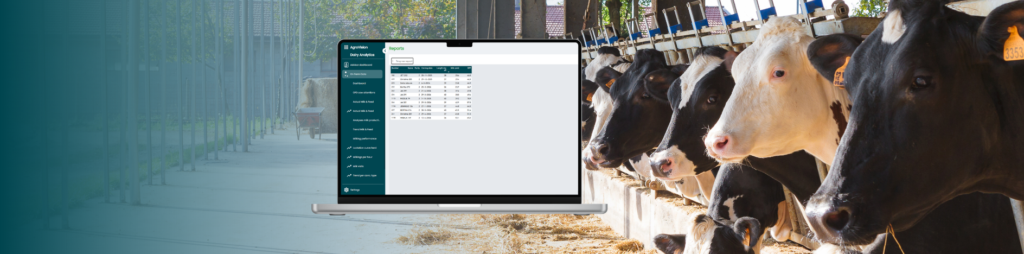

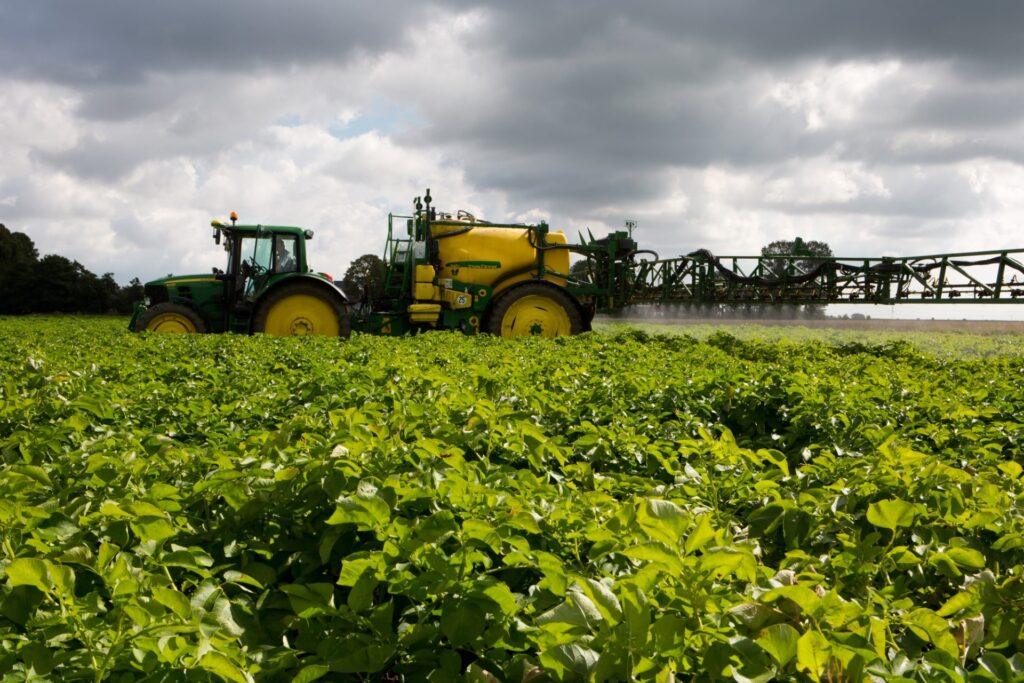
AI in agriculture: how smart data helps farmers make better decisions
Where a human can oversee a handful of numbers at once, AI can compare thousands of data points simultaneously. It looks for patterns and connections that the human brain cannot detect. Based on that, the software gives a signal, warning, or recommendation.

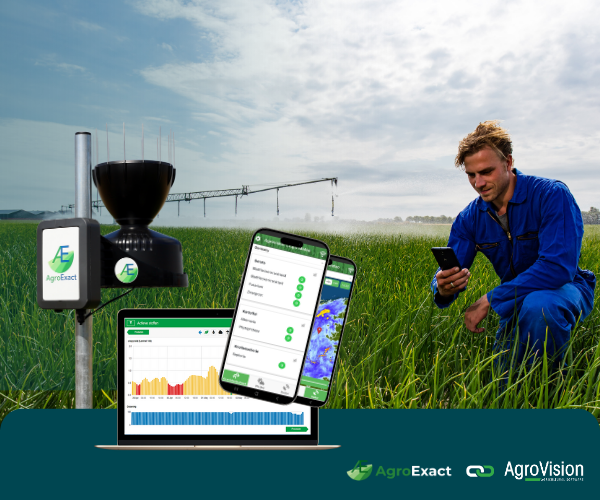
New weather station network in Germany delivers accurate, field specific weather data and spraying advice
Starting 1 April, a new national, comprehensive weather station network with integrated advisory software will be rolled out across Germany. This all in one system provides arable and vegetable farmers with precise local weather data and practical spraying advice, enabling them to better prioritise and avoid unnecessary spraying costs.